I spent the morning visiting the Old Slave Mart Museum in the heart of Charleston. I knew the experience would be profound, powerful, and important, so I decided to tour the museum solo. (My husband took our children for a leisurely stroll around the neighborhood.) I learned upon entering the museum that photographs were not allowed – bummer – so I put my camera away and took furious notes on the copious displays in the museum. I wanted to absorb as much as I could.
The Old Slave Mart was the site of public slave auctions, originally called Ryan’s Mart. For years, slave auctions were held outdoors. Over time, the open slave auctions became illegal and many Charlestonians felt the open slave trading didn’t fit the image of the “genteel city” they wanted to project so Thomas Ryan opened the indoor slave market on that very spot. Starting in 1786, Northern states started to ban importing enslaved Africans. In 1808 it became a federal crime to import slaves. As a result, slave owners and traders began to buy and sell American born enslaved Africans within the United States. This is known as the domestic slave trade. Charleston was one of the most prominent hubs of both slave trades – in the importing of slaves and in the domestic slave trade. At one point, 40% of enslaved Africans were sold in Charleston.
In addition to providing detailed information about the domestic slave trade and the business of slavery (Who were the buyers? What was an auction like for the enslaved Africans?), the museum focused on the experience of the enslaved Africans. Exhibits explored the treacherous “long march” – where African captives walked hundreds of miles inland to the slave trading ships on Africa’s Atlantic coast. The Middle Passage – the frightening and horrific boat ride across the Atlantic that lasted one-three months – was depicted in a series of images. The exhibits explained the root of slave life as spirituality and family. Some enslaved Africans earned their own money through mastering certain crafts and eventually bought their own freedom.
While it was hard to absorb the details outlined at the museum, it was important for me to do so. I was encouraged by the fact that the way we teach our fifth graders about slavery in the colonial period captures the necessary themes and with the appropriate amount of detail for a fifth grader. There’s no doubt that it is a challenging subject to broach, which is why my continued education about slavery is crucial.
Before I left, I approached one of the museum employees with a wondering. I told her that I recognize that slavery is clearly engrained in Charleston history, and it should be acknowledged that the very site of a prominent slave market is now a museum that faces the atrocities of slavery. I asked if the Charleston and South Carolina residents are aware of the role slavery played in its history, and the role Charleston played in slavery. The employee did not mince words and said she doesn’t think so, unfortunately. She said it’s a process, and hopefully that will happen in time. She presumes that pressure from the tourists might turn the corner, as some of the historical tours in Charleston don’t even mention slavery.
After my morning at the Old Slave Mart, we decided to take one of those historical tours, a horse carriage tour. We learned lots of interesting and fun facts about the history of Charleston. The guide discussed the founding of the South Carolina colony by King Charles’s proprietors. We passed through Rainbow Row – a row of brightly colored Georgian and Merchant style homes. We learned that the famous song “Summertime” was written in Charleston, Margaret Mitchell (Gone with the Wind author) spent time in that neighborhood, and scenes from The Notebook were filmed in the Calhoun Mansion. I listened carefully for mention of slavery, and there was a brief note at the tour’s end. The Charleston City Market, which we also toured, was established as a market that would never allow the sale of humans. However, enslaved Africans were the only people who bought and sold other products there, as errands for their owners.
Charleston is beautiful. The tree-lined streets and brightly colored colonial homes and flowers make every corner visually stunning. We spent the rest of the day simply enjoying the town and snapping dozens of pictures.
It is important for ALL of Charleston’s history to be remembered – the history that is easy to discuss and that which reflects a dark part of American history.
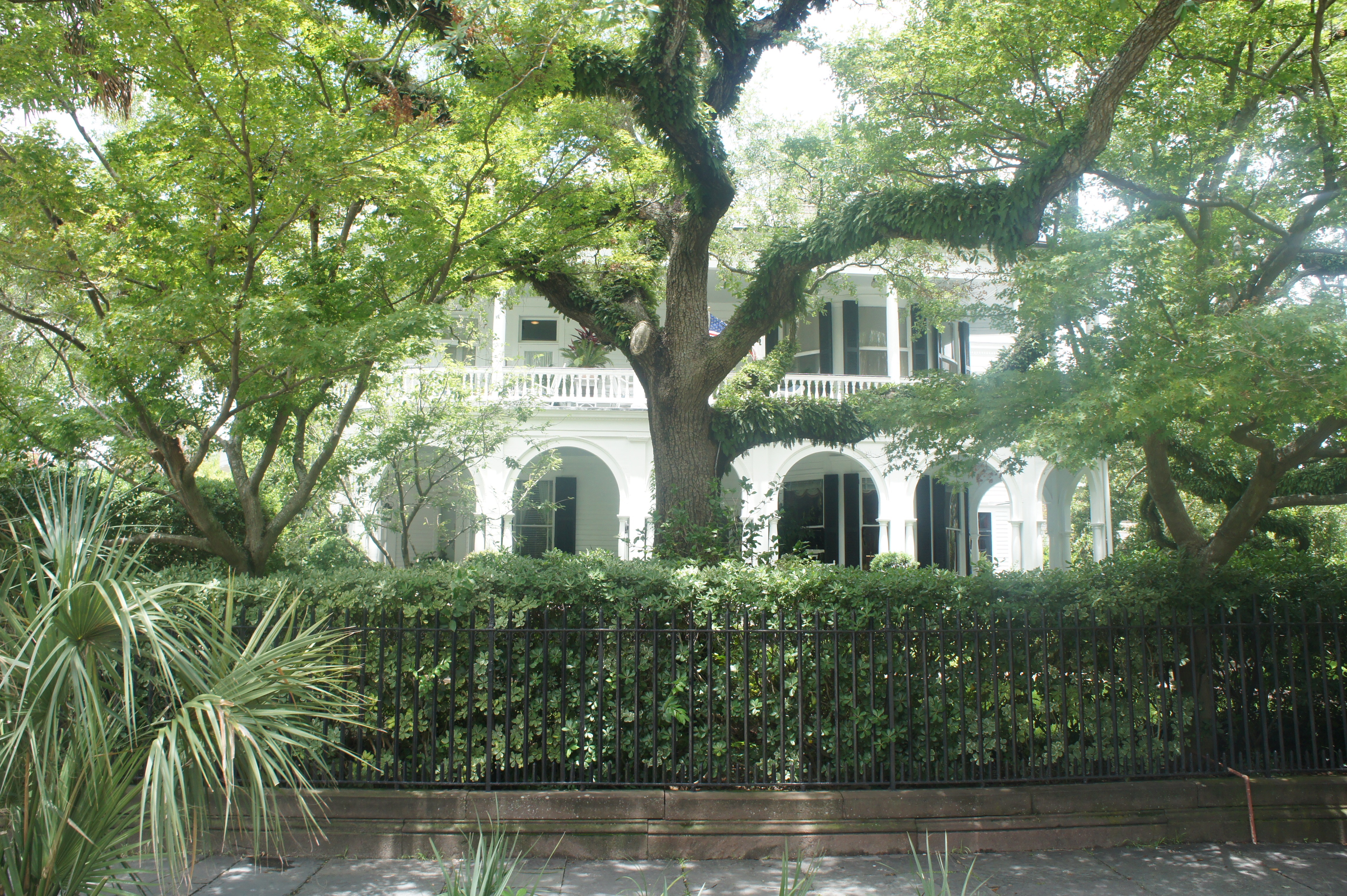
Historic Charleston
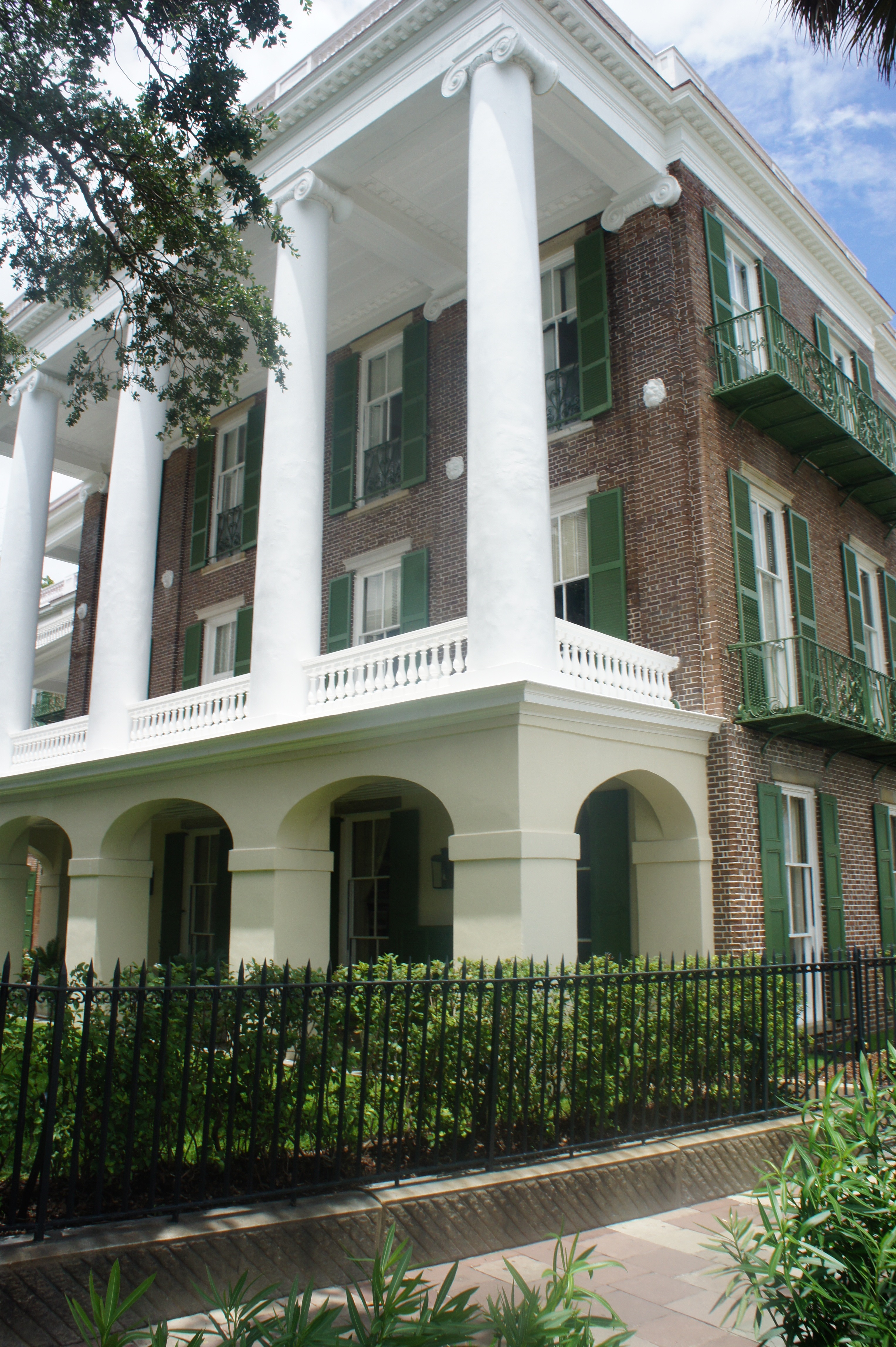
Historic Charleston
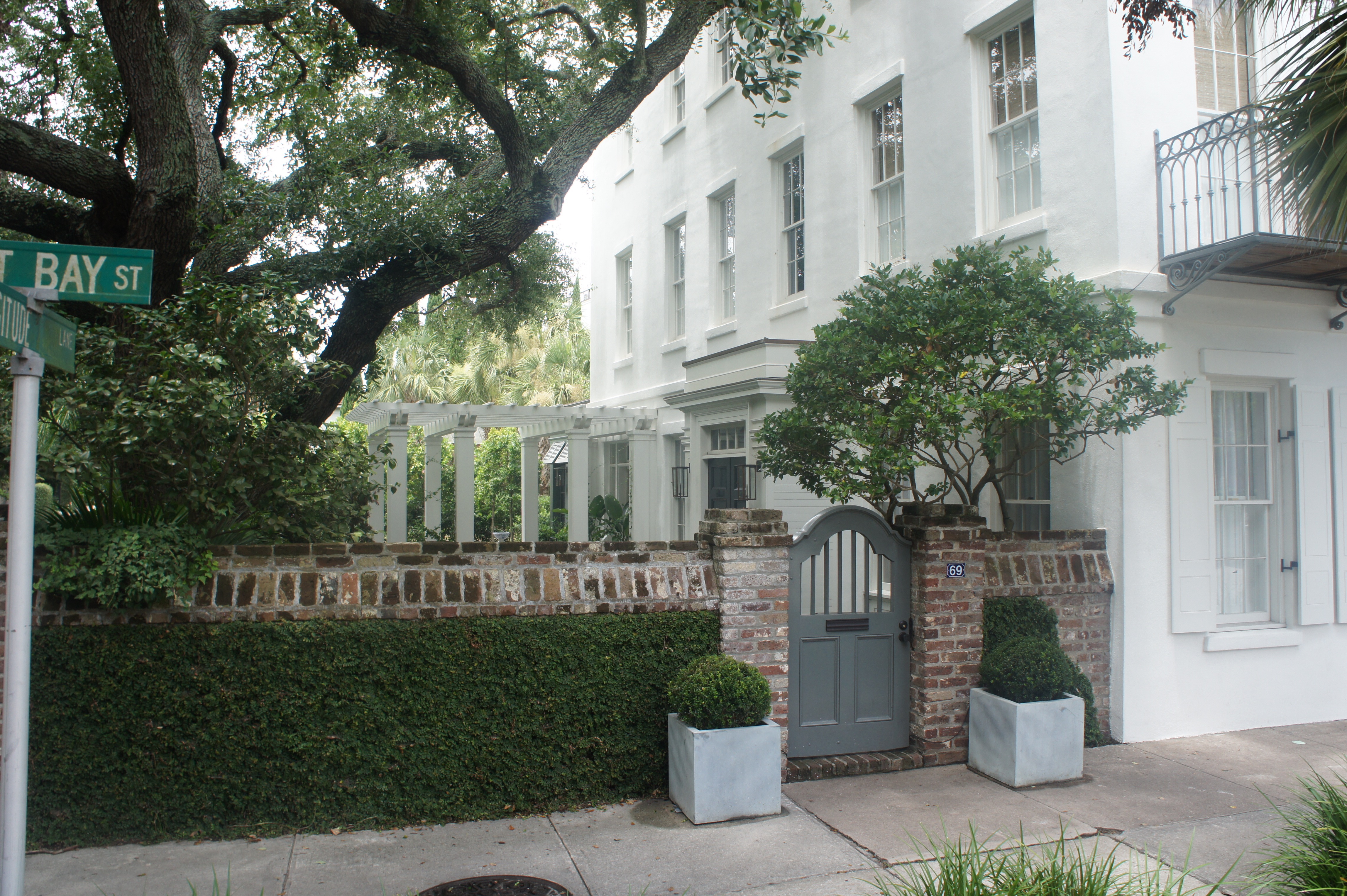
Historic Charleston
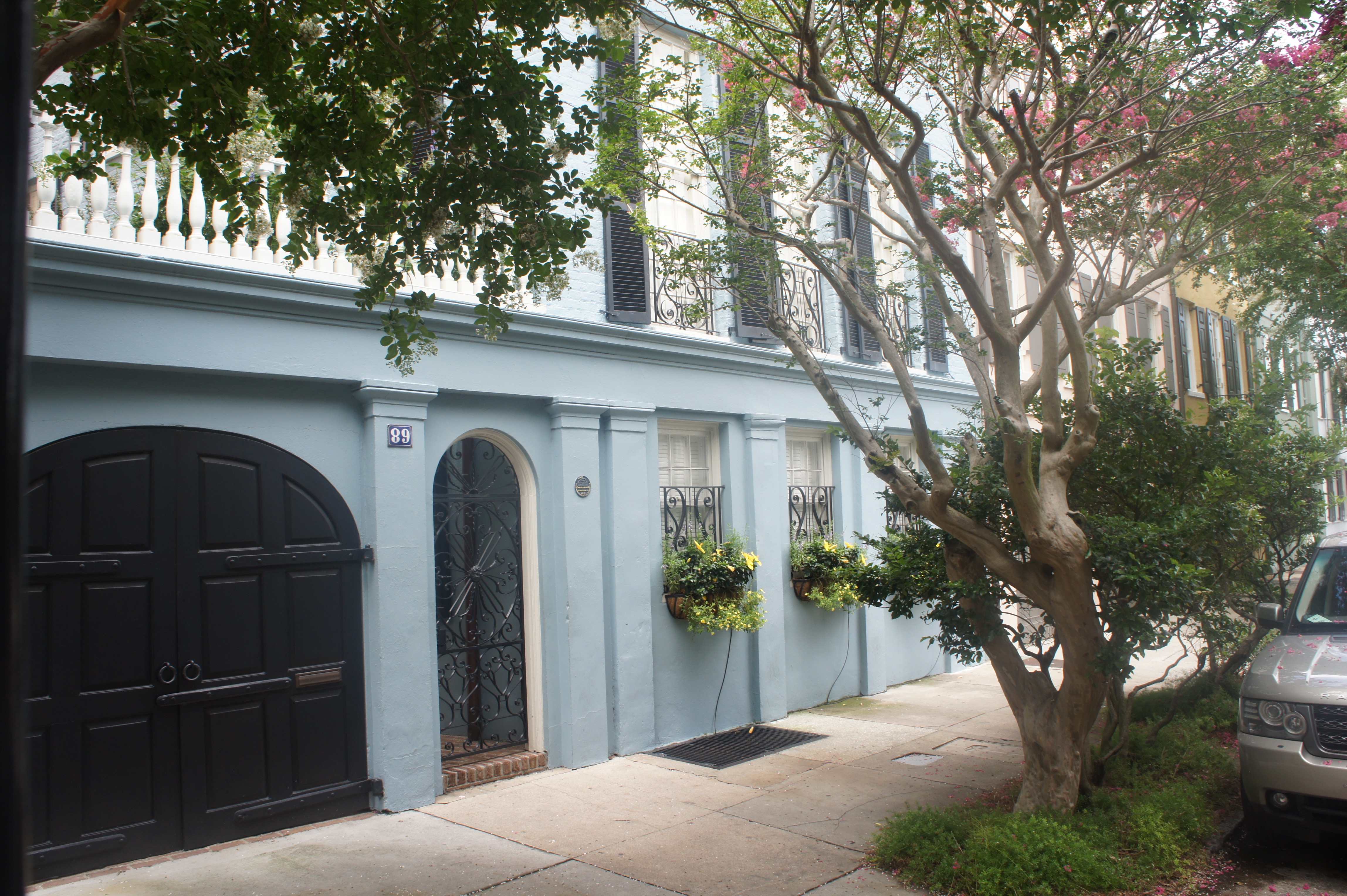
Historic Charleston

Walking the streets of Historic Charleston
 Miss Healy in Colonial America
This is such an interesting and informative post. The museum employee’s response to your question and the lack of the discussion of the history of slavery in the other historical tours made me wonder how the Charleston residents feel about having the Old Slave Mart Museum in the town. In looking for some more info online, I was surprised to see that the current museum has only been open since 2007. I found the history of the use of the building post Civil War to be very interesting as well. Thank you for the introduction.
(Also–the photos of historic Charleston are gorgeous.)
LikeLike
So glad you enjoyed it and are continuing to read more. I have a feeling the Charlestonians don’t acknowledge the museum much, though that is a guess based on the museum employee’s response. I was heartened to see that the museum was very crowded by the time I left, so they seem to do well. She agreed and said their business is good. At least tourists are seeking it out.
LikeLike
Your accounts of each day are so vivid, Ginger! I love your writing style…so filled with specifics. I especially enjoyed the food blog entry regarding Cracker Barrel cuisine. ^^ Seeing that revolutionary soldier wearing the full dress uniform coupled with your comment on the heat and humidity give one pause to think how difficulty the customs of the time made life for the people living there. We took the same trip with our family when my children were in high school. The towns are so beautiful. I’m eager to read your post on Williamsburg.
LikeLike
Thanks so much, Loren!! Guess what – I saw a colonist at Williamsburg playing Shut the Box with some children! The exact same version we played for Math Day this year! I’ll send you photos 🙂
LikeLike